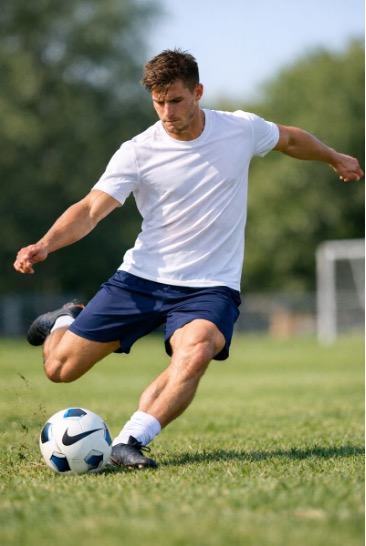
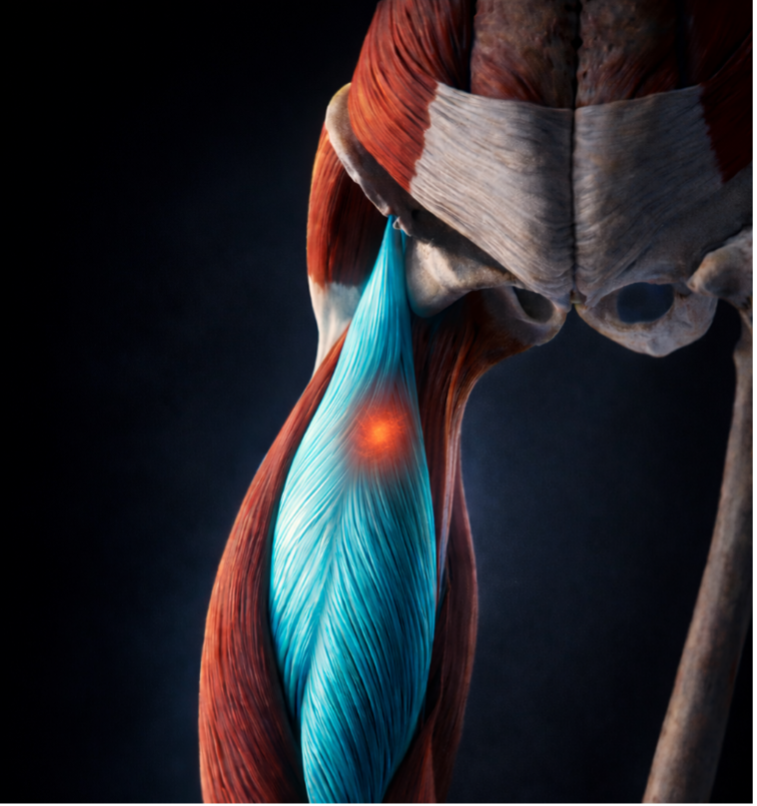
A “pop” in the groin during football is often assumed to be a groin strain. But sometimes the injury is higher up the thigh and involves one of the key quadriceps muscles: the rectus femoris. When this muscle tears—especially at the musculotendinous junction (where muscle meets tendon)—it can cause immediate pain, swelling, bruising down the front of the thigh, and a noticeable lump as the tissue heals.
A common real-world pattern
A typical story looks like this: an amateur footballer feels a sudden pop in the groin area, followed by swelling and bruising over the front of the thigh. They rest briefly, try to return to sport after a couple of weeks, and then struggle because pain persists—especially with sprinting, kicking, and hip flexion.
On examination, clinicians may find:
- A palpable lump in the upper/front thigh (proximal quadriceps)
- Pain and mild weakness with resisted hip flexion
- Good overall quadriceps development, which can be an important factor in recovery potential
What ultrasound can show (and why it matters)?
Ultrasound is a strong first-line scan for suspected muscle tears. It can confirm whether there is a rectus femoris tear, how large it is, and whether a surrounding haematoma (a collection of blood from the injury) is present.
When ultrasound shows a large tear—such as one involving more than 50% of the cross-sectional area and several centimetres in length—it changes the conversation. These are not “minor strains.” They can take longer to heal, and they carry a higher risk of ongoing pain or repeat injury if return-to-sport is rushed.
Why MRI is sometimes the next step
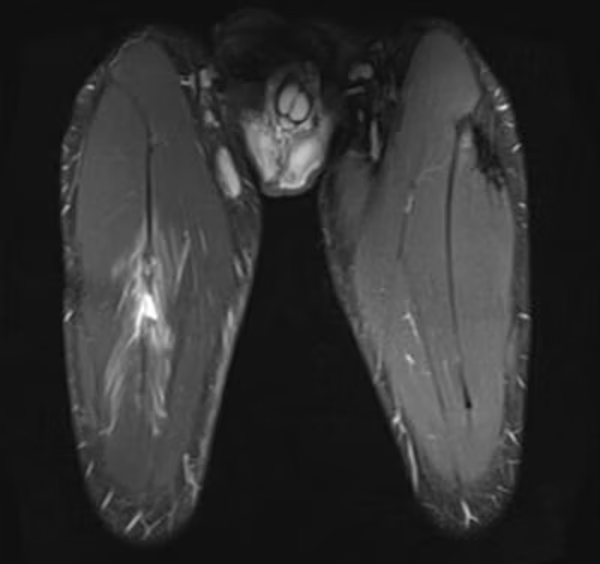
MRI can add detail that ultrasound may not fully capture, especially regarding:
- The exact extent and location of the tear
- Tendon involvement (which can influence treatment decisions)
- The size and behaviour of any haematoma
- Associated injuries that may affect rehab planning
Treatment options: conservative care vs early surgical opinion
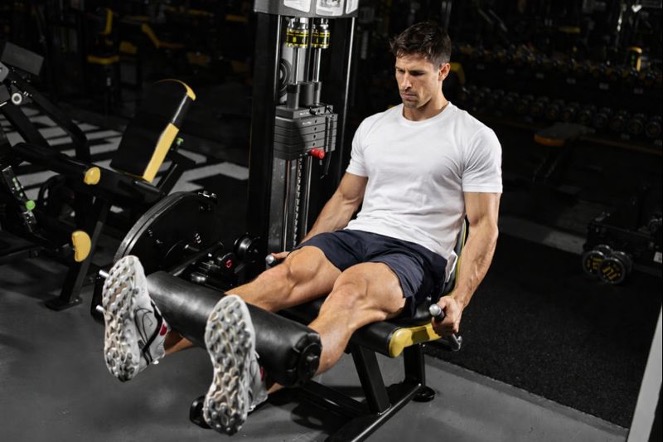
Many rectus femoris tears can be managed conservatively (non-surgically), particularly when the athlete has excellent overall quadriceps development and good function despite the injury. Conservative care typically focuses on staged rehab: protecting the tissue early, restoring strength and control, then progressing to sport-specific loading.
However, when the tear is large and function-limiting—especially at the musculotendinous junction—an early surgical opinion can be appropriate. The decision usually depends on a combination of scan findings, clinical weakness, the athlete’s goals, and how they’re progressing over time.
What about aspirating the haematoma?
In some cases, aspiration of a haematoma may be considered to help reduce discomfort and potentially speed up the early rehab phase. This is not routine for everyone, and it depends on factors like the size, location, symptoms, and how accessible it is. If considered, it should be done by an experienced clinician, often with ultrasound guidance for accuracy.
Return to football: don’t rush it
The biggest mistake with these injuries is returning too soon because bruising fades and walking feels easier. Sprinting, kicking, and explosive hip flexion stress the rectus femoris heavily. A structured plan matters more than a fixed timeline.
In general, return-to-sport decisions should be based on:
- Pain-free strength testing compared with the uninjured side
- Tolerance of progressive running, sprinting, and kicking drills
- Confidence and control under fatigue
- Scan findings when clinically needed (especially in larger tears)
Bottom line
A “groin pop” with front-thigh bruising can be a rectus femoris tear rather than a simple groin strain. Ultrasound can confirm the diagnosis and size of the injury, while MRI can assess tendon involvement in more detail. Many cases can be managed conservatively—especially with strong quadriceps development—but larger tears may warrant early surgical input, and haematoma aspiration may help in selected situations.