If you are injured, you are in a vulnerable position.
You want answers. You want progress. And naturally, you start looking for something that will speed things up.
That is where a lot of people get pulled towards injections, supplements, or the latest trend.
But the reality is this.
Most successful recoveries come from doing the basics properly. Not once or twice. But consistently, over time.
Here is what actually makes a difference.
Get the diagnosis right
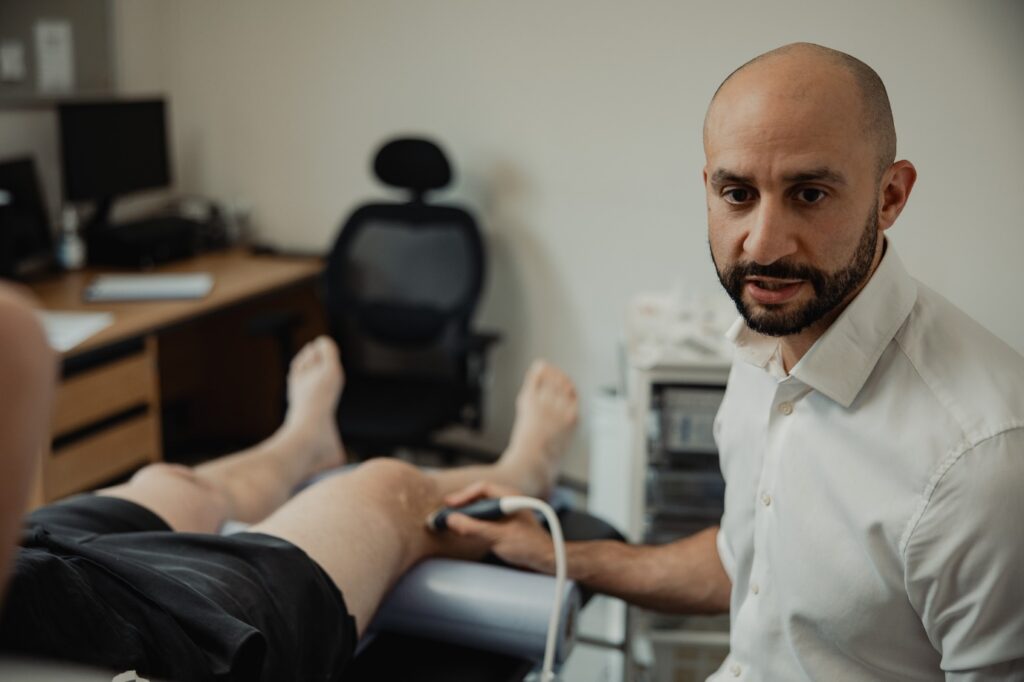
Rehab often fails because the starting point is not clear enough.
Being told it is a strain or tendon pain might be fine early on. But if symptoms persist, that level of detail is not enough.
A proper diagnosis usually involves:
A focused clinical assessment
Imaging when it is needed, such as ultrasound or MRI
Making sure more serious issues are not being missed
Once you understand which tissue is involved and how severe the problem is, everything else becomes more precise. The loading, the timelines, and the expectations all start to make sense.
Progressive loading, not complete rest
Rest can help settle pain in the short term.
But tissues do not rebuild without load.
Most muscle and tendon injuries respond best to a structured progression. That usually means starting with controlled work and gradually increasing demand:
Isometric exercises early on to reduce pain and switch the muscle back on
Slow, controlled strength work to build capacity
Higher load work that stores and releases energy, such as hopping or change of direction
A return to speed, intensity, and sport specific movements
This is what recovery actually looks like. Not just pain settling, but capacity being rebuilt.
Manage load properly
A common reason injuries keep coming back is poor load management.
This is where things often go wrong:
A sudden increase in training volume
Adding intensity too quickly, such as sprinting or heavy lifting
Going back to matches before the body is ready for high speed efforts
The aim is not to avoid pain completely. It is to increase load in a controlled way.
Symptoms should guide you, not stop you.
Sleep is part of treatment
Sleep is often overlooked, but it has a direct impact on recovery.

Poor sleep increases pain sensitivity, slows tissue repair, and affects how your body adapts to training.
For many people, improving sleep is one of the simplest and most effective changes they can make.
Nutrition underpins recovery

You do not need complicated supplements to heal.
You need the basics done properly:
Enough protein to support tissue repair
Enough overall energy to meet the demands of recovery
Good hydration
A balanced intake of vitamins and minerals from real food
If you are under fuelling, recovery will be slower. It is as simple as that.
Where treatments and interventions fit
There is a role for medical interventions in the right situation.
Depending on the diagnosis and stage of recovery, this can include:
Targeted physiotherapy and structured strength work
Ultrasound guided injections for specific conditions
Short term offloading strategies such as bracing or taping
Pain management to allow rehab to progress
The key point is this.
These interventions should support your rehabilitation. They should not replace it.
Return to sport should not be based on time alone
One of the biggest mistakes is using time as the main guide.
Just because a certain number of weeks has passed does not mean the body is ready.
A better approach looks at:
Strength and side to side differences
Functional testing such as hops or repeated calf raises
Ability to tolerate speed and fatigue
Confidence in movement
Return to sport should be earned through what you can do, not just how long it has been.
Bottom line
Before you consider injections or supplements, get the fundamentals right.
A clear diagnosis.
A structured loading programme.
Smart progression of training.
Good sleep.
Adequate nutrition.
These are not the most exciting parts of recovery.
But they are the difference between short term improvement and long term resilience.