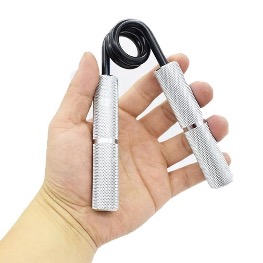
Grip strength might seem like a small detail.
In reality, it can reflect something much bigger. It gives insight into overall strength, physical resilience, and general health.
It is also one of the simplest things we can measure in clinic. And yet, it has surprisingly strong links to long term health outcomes.
What the research shows
One of the most well known studies in this area is the Prospective Urban Rural Epidemiology Study, published in The Lancet in 2015.

This study followed 139,691 people over time.
It found that lower grip strength was associated with a higher risk of:
All cause mortality
Cardiovascular death
Heart attack
Stroke
One of the more striking findings was that, within this dataset, grip strength was a stronger predictor of overall and cardiovascular mortality than systolic blood pressure.
To give that some context, the study showed that for every 5 kilogram reduction in grip strength, the risk of outcomes such as death and cardiovascular events increased by around 16 to 17 percent.
That does not mean grip strength is more important than blood pressure in general. But it highlights how closely strength is linked to overall health.
What grip strength is actually telling you
Grip strength is best seen as a marker.
It reflects what is going on more broadly in the body.
Lower grip strength is often associated with:
Lower overall muscle strength
Reduced physical activity
Poorer metabolic health
Increased risk of frailty, particularly with ageing
It is not a diagnosis in itself.
A low reading does not mean something serious is definitely wrong. And improving grip strength alone has not been proven to directly reduce the risk of death or cardiovascular disease.
The authors of the PURE study themselves highlighted the need for more research in this area.
Why strength still matters
Even if grip strength is mainly a marker, it points towards something important.
The behaviours that improve strength tend to improve health more broadly.
Regular strength training is associated with:
Better balance and a lower risk of falls
Improved mobility and day to day function
Stronger muscles and connective tissues
A greater ability to stay active consistently
In that sense, grip strength acts as a simple signal.
If it is low, it is worth asking why.
How this applies in real life
In clinic, grip strength can be a useful starting point.
It helps open a conversation around strength, activity levels, and long term health.
For some people, it highlights deconditioning after injury.
For others, it reflects a more general decline in strength over time.
The key is not to fixate on the number itself, but to understand what sits behind it.
Bottom line
Grip strength is quick to measure and easy to overlook.
But large scale research shows it is linked to cardiovascular risk and long term health outcomes.
If your grip strength is low for your age and build, it is worth paying attention to. Not as a scare tactic, but as a prompt.
Build strength. Stay active. Look after the fundamentals.
That is what drives long term health.