Lateral hip pain is one of the most common problems I see in clinic, and greater trochanteric pain syndrome, or GTPS, is very often the correct diagnosis.
In most cases it is.
But not always.
A recent case was a good reminder that pain patterns can overlap, and that a careful, structured assessment is what separates the right diagnosis from the wrong one.
What is GTPS?
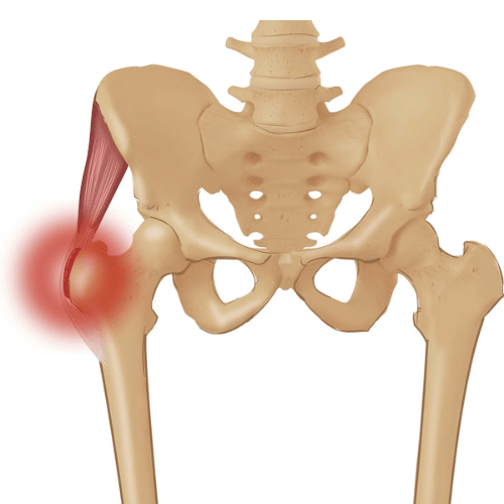
Greater trochanteric pain syndrome describes pain arising from structures around the greater trochanter, most commonly the gluteal tendons and the bursae that sit close to them.
It typically presents as pain over the outer hip, often worse with walking, climbing stairs, lying on the affected side, or standing on one leg. It is common, well recognised, and usually responds well to a structured loading and rehabilitation programme.
What is a frozen hip?
Adhesive capsulitis is far better known in the shoulder, where it is often called frozen shoulder. The same process can occur in the hip, although it is far less commonly recognised.
It involves inflammation and progressive tightening of the joint capsule, leading to pain and a genuine loss of movement, particularly rotation. Unlike a tendon problem, the restriction is coming from the joint itself, not from a specific loaded structure.
Why the overlap happens
Both conditions can cause pain over the outer hip. Both can be aggravated by walking and weight bearing. Both can leave a patient limping and frustrated.
On the surface, that overlap can make the two conditions easy to confuse, especially early in their course. This is exactly why relying on the location of pain alone is not enough.
How I approached this case
To assess for GTPS, I used a validated cluster of clinical tests described by physiotherapist Alison Grimaldi. This includes:
- Tenderness on palpation over the greater trochanter
- Pain with resisted hip abduction
- A positive FABER test
- Pain with single leg stance
In this case, none of these were positive.
What stood out instead was restricted passive rotation of the hip, together with a more global stiffness pattern rather than a focal, load related pain response. That combination pointed away from a tendon problem and toward an early frozen hip, or adhesive capsulitis of the hip.
Why accurate diagnosis matters
This is not just an academic distinction. It changes the entire management plan.
GTPS is generally managed with graded load management and gluteal strengthening, often alongside activity modification to reduce compressive load on the tendons.
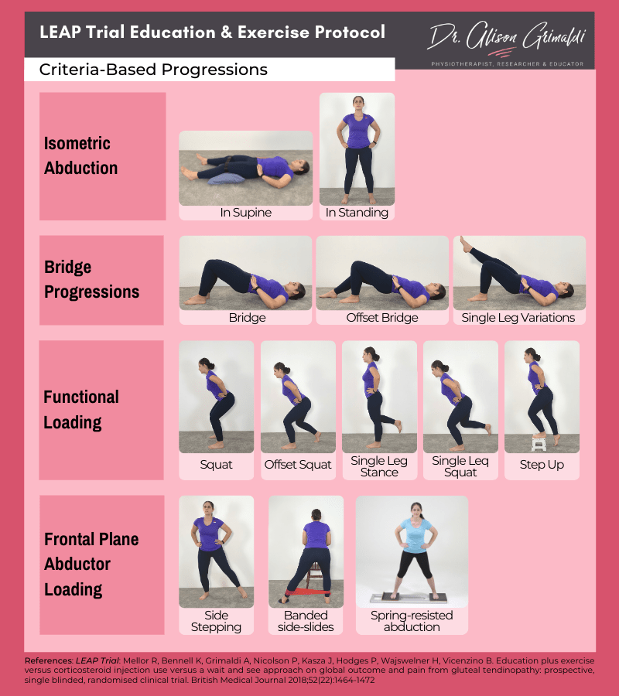
A frozen hip is managed very differently. The priority is protecting an irritable joint, addressing stiffness appropriately, and setting realistic expectations around a naturally longer recovery timeline. Aggressive strengthening or loading through an inflamed, stiff capsule can aggravate symptoms rather than help them.
Getting the diagnosis wrong does not just delay recovery. It can actively make things worse, and it can undermine a patient’s confidence in their treatment and their own body.
What this means if you have hip pain
If lateral hip pain is not responding the way you would expect, or if you notice significant stiffness rather than purely load related pain, it is worth having the diagnosis reviewed.
A thorough clinical assessment, and imaging where appropriate, can clarify whether you are dealing with a tendon problem, a joint problem, or something else entirely.
Bottom line
Not all lateral hip pain is gluteal tendinopathy.
Pain patterns can genuinely overlap, but a careful, structured clinical assessment makes the difference between the right diagnosis and the wrong one.
Accurate diagnosis is not just academic. It changes management, it changes prognosis, and it changes patient confidence.