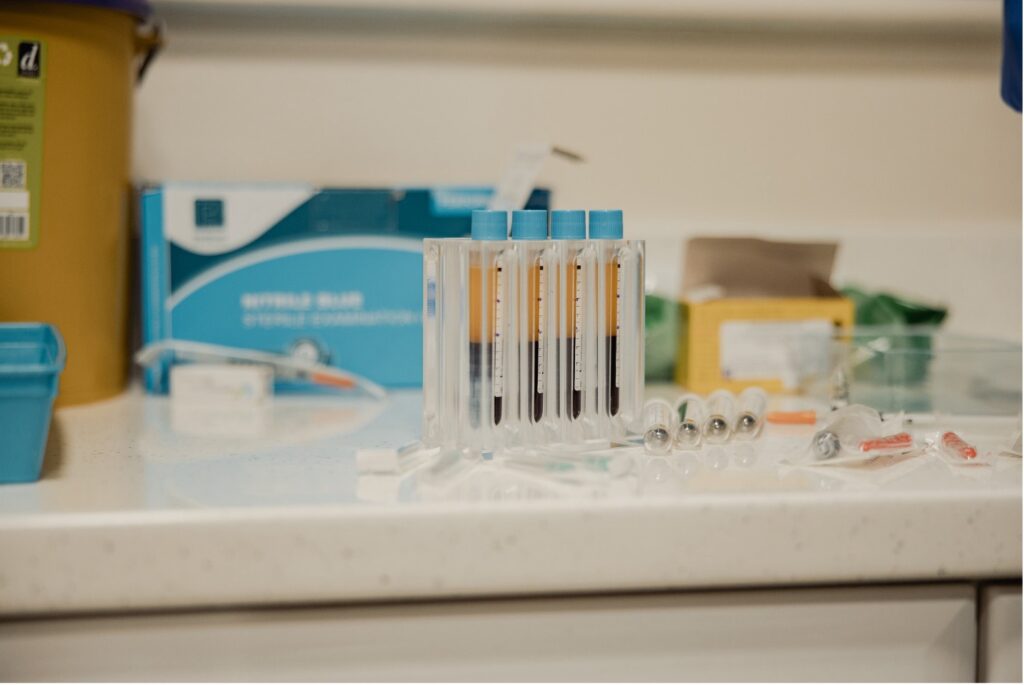
PRP has become one of the most talked about treatments in sports medicine. Some people describe it as a breakthrough. Others dismiss it completely. The truth, as is often the case in medicine, sits somewhere in the middle.
One of the biggest problems when discussing PRP is that people tend to ask a very simple question:
“Does PRP work?”
The reality is that this is probably the wrong question. A better question is:
“For which conditions, in which patients, and using which type of PRP?”
Because PRP is not a single treatment.
What is PRP?
PRP stands for Platelet Rich Plasma.
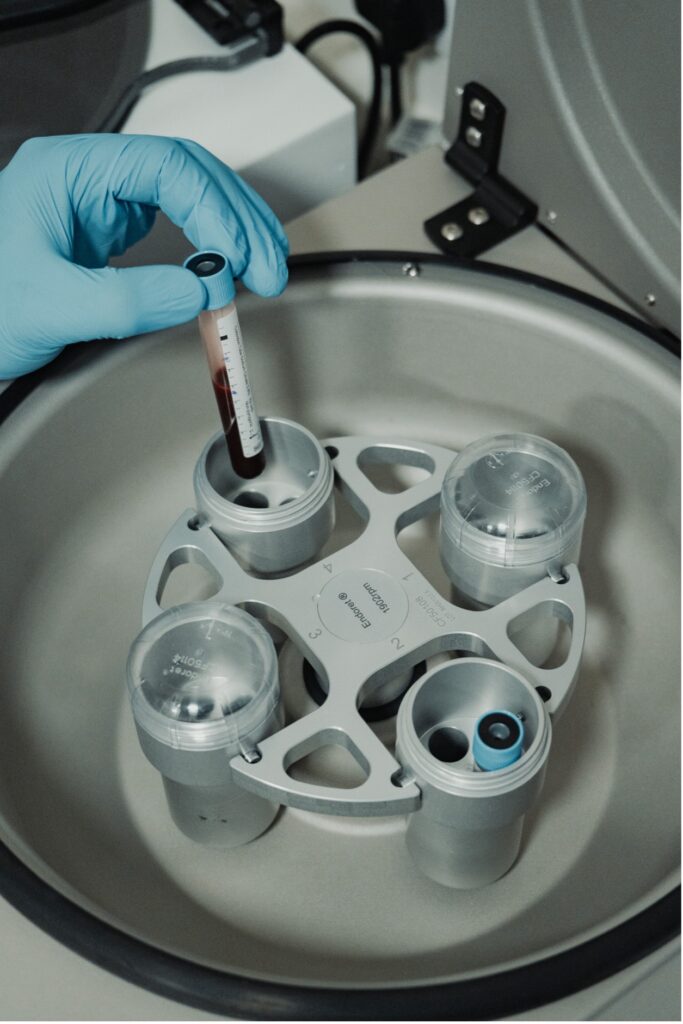
It involves taking a sample of your own blood and processing it in a centrifuge to concentrate platelets and other biological components. This concentrated solution is then injected into the area being treated.
The theory is straightforward.
Platelets contain growth factors and signalling molecules that play a role in healing and tissue repair. By concentrating and delivering these to a specific area, the aim is to support the body’s natural recovery processes.
Why does the evidence seem so confusing?
If you spend any time researching PRP online, you will quickly find conflicting information.
One study says it works.
Another says it does not.
Patients often find this frustrating, and understandably so.
Part of the problem is that studies are often grouped together under the umbrella term “PRP” even though the treatments being compared may be very different.
Different studies may involve:
Different injuries
Different patient populations
Different rehabilitation programmes
Different injection techniques
Different PRP preparations
When you look more closely, many studies are not comparing like with like.
Not all PRP is the same
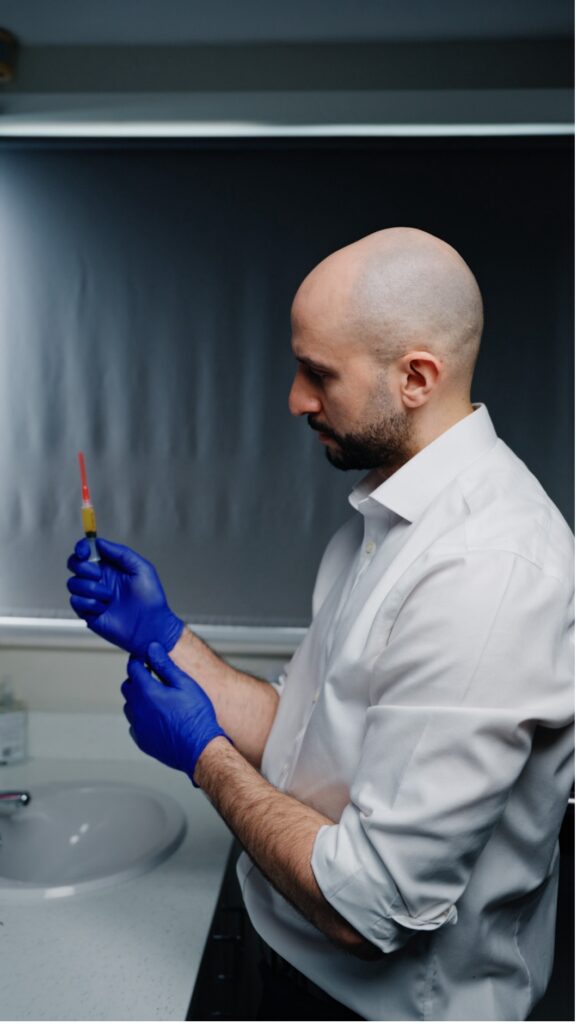
This is one of the most important concepts for both patients and clinicians to understand.
PRP can vary significantly in its composition.
The two most important variables are:
Platelet concentration
White blood cell (leucocyte) content
These differences influence the biological response that occurs after injection.
In simple terms, two clinics may both advertise “PRP”, but the actual product being injected may be very different.
That is one reason why outcomes can vary so much between studies and between patients.
Does PRP work?
For some conditions, there is encouraging evidence.
For others, the evidence is less convincing.
In my own practice, I tend to use PRP selectively rather than as a blanket treatment for every painful tendon or joint.
The diagnosis matters.
The stage of the condition matters.
The patient’s goals matter.
And just as importantly, the rehabilitation programme matters.
PRP should never be viewed as a magic injection that replaces good rehabilitation.
Even when it is appropriate, it is usually one part of a bigger treatment plan.
How I approach PRP in practice
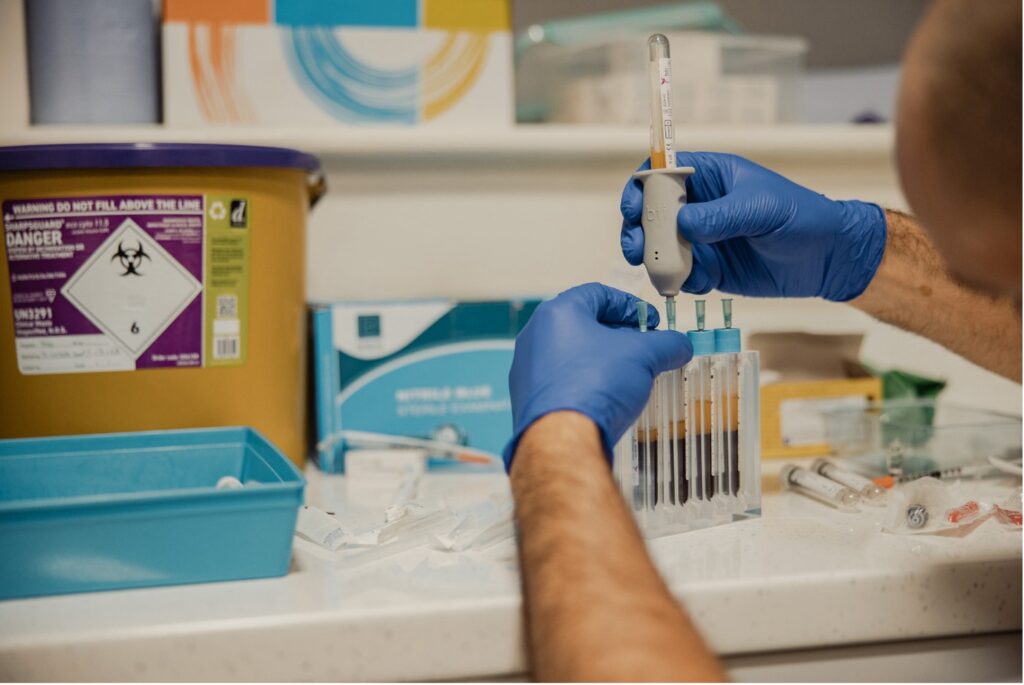
When I consider whether PRP might be appropriate, I start with the diagnosis rather than the injection.
Questions I ask include:
What tissue are we treating?
Is this a tendon, ligament, muscle or joint problem?
Is the condition acute or longstanding?
How irritable are the symptoms?
What rehabilitation programme will follow the injection?
Only after answering those questions do I start thinking about which PRP preparation may be most suitable.
The formulation is part of the prescription, not an afterthought.
The most common mistake
One of the biggest mistakes in regenerative medicine is assuming that the same PRP preparation should be used for every condition.
A patient with knee osteoarthritis is not the same as a patient with a chronic Achilles tendinopathy.
A partial tendon tear is not the same as a reactive tendon flare.
Different tissues and different stages of injury may require a different biological approach.
When PRP is treated as a one size fits all solution, outcomes become unpredictable.
What should patients ask?
If you are considering PRP, it is reasonable to ask:
Why has PRP been recommended for my condition?
What evidence supports its use?
What type of PRP is being used?
What rehabilitation programme will I need afterwards?
How will success be measured?
A good consultation should answer all of these questions before any injection takes place.
Bottom line
PRP is neither a miracle treatment nor a gimmick.
For the right patient, with the right diagnosis, and as part of a well structured rehabilitation programme, it can be a useful tool.
But not all PRP is the same.
The conversation should move beyond simply asking whether PRP works and focus instead on which patient, which condition, and which formulation is most likely to benefit.
That is where the real discussion begins.